The History of Measurement: From Ancient Cubits to Modern Units
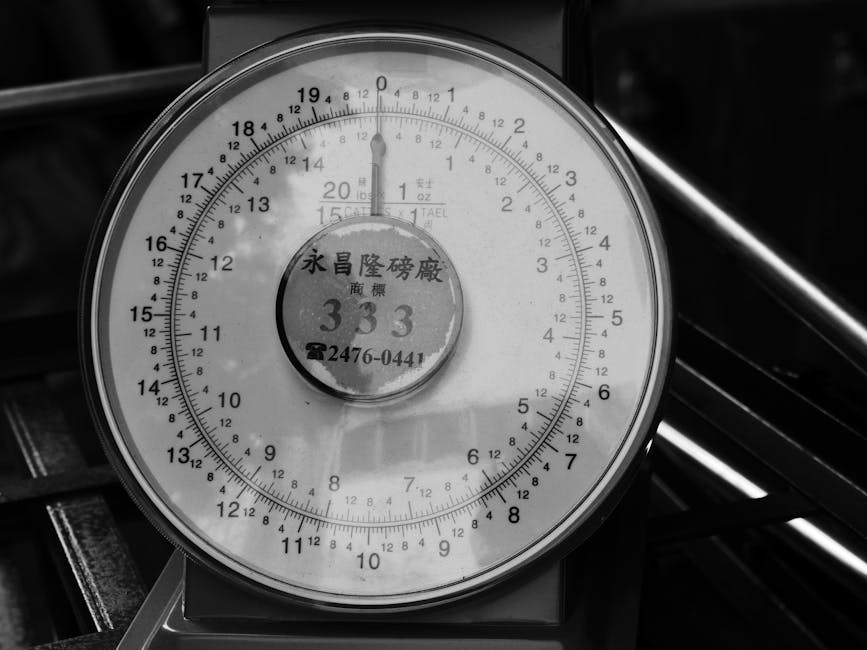
Measurement is so woven into daily life that we rarely stop to consider its origins. We step on scales, check thermometers, measure ingredients, and navigate by GPS without giving a second thought to the thousands of years of human ingenuity that made these actions possible. Yet the history of measurement is a remarkable story -- one of trial and error, political upheaval, scientific breakthroughs, and a relentless pursuit of precision that continues to this day.
Ancient Measurement: The Human Body as a Standard
The earliest measurement systems were based on the most readily available reference: the human body. Ancient civilizations measured the world using the dimensions of hands, feet, arms, and fingers.
- The cubit was one of the oldest units of length, used extensively in ancient Egypt, Mesopotamia, and Rome. Defined as the distance from the elbow to the tip of the middle finger, a cubit was approximately 18 inches (45 cm). The Great Pyramid of Giza was built using the royal cubit, which was standardized at about 20.6 inches.
- The hand measured the width of a human palm, roughly 4 inches. This unit survives today -- horses are still measured in "hands."
- The foot was based on the length of a human foot. Roman soldiers used a double step, the passus, to measure distance -- one thousand paces gave us the word "mile" (from the Latin mille passus).
- The fathom represented the span of outstretched arms, approximately 6 feet, and was used for measuring the depth of water.
The obvious problem with body-based measurements was inconsistency. One person's cubit was not the same as another's. As trade expanded and construction projects grew more ambitious, the need for standardization became urgent.
Early Standardization Efforts
Ancient rulers understood that commerce and taxation required consistent measurements. The Egyptians maintained master cubit rods in temples, and any local measuring sticks had to match these standards. In medieval England, the Magna Carta of 1215 included provisions for standardizing weights and measures throughout the kingdom.
Despite these efforts, measurement remained chaotic for centuries. By the 18th century, France alone had over 250,000 different units of weights and measures in use across its various provinces. A "pound" of bread in Paris was not the same as a "pound" in Lyon. This confusion was not merely inconvenient -- it was a source of constant fraud and economic inefficiency.
The French Revolution and the Birth of the Meter
The metric system was born out of one of history's most turbulent periods. During the French Revolution, the National Assembly commissioned the French Academy of Sciences to create a rational, universal system of measurement. The guiding principles were ambitious: the new system would be based on nature, use a decimal structure, and belong to no single nation.
In 1793, the meter was defined as one ten-millionth of the distance from the North Pole to the equator, measured along the meridian passing through Paris. Two astronomers, Jean-Baptiste Delambre and Pierre Mechain, spent six years surveying the arc from Dunkirk to Barcelona to establish this distance -- a monumental undertaking during a period of war and political turmoil.
The kilogram was defined as the mass of one cubic decimeter (one liter) of water at its densest temperature, approximately 4 degrees Celsius. These definitions tied measurement to the physical world rather than to any king's body or arbitrary decree.
The Spread of the Metric System
Adoption was gradual. France made the metric system compulsory in 1840. The Treaty of the Metre in 1875 established international bodies to maintain standards, and by the early 20th century, most of the industrialized world had adopted metric measurements. The United Kingdom began its slow transition in the 1960s, though vestiges of the imperial system -- pints of beer, miles on road signs -- persist to this day.
The United States has had a complex relationship with the metric system. Congress authorized its use in 1866, and the Metric Conversion Act of 1975 declared it the preferred system -- but compliance remained voluntary. Today, American science, medicine, and military operations use metric, while everyday life remains firmly imperial.
The Creation of the SI System
In 1960, the General Conference on Weights and Measures formalized the International System of Units (SI), refining the metric system into the coherent framework used today. The SI system established seven base units: the meter, kilogram, second, ampere, kelvin, mole, and candela. All other units are derived from combinations of these seven.
The beauty of SI lies in its internal consistency. Energy, for example, is measured in joules (kg m2/s2), which naturally derives from the base units for mass, length, and time. This mathematical elegance is why scientists and engineers worldwide rely on SI -- and why tools like our Length Converter and Weight Converter are so useful for bridging the gap between systems.
Modern Precision: Redefining Units by Nature's Constants
For more than a century, the kilogram was defined by a single physical object: a platinum-iridium cylinder stored in a vault near Paris known as the International Prototype of the Kilogram (IPK). The problem was that physical objects change over time. Measurements showed that the IPK's mass had drifted by approximately 50 micrograms relative to its copies -- a tiny but significant discrepancy for precision science.
In 2019, a landmark redefinition tied all SI base units to fundamental constants of nature:
- The meter is defined by the speed of light in vacuum.
- The kilogram is defined by the Planck constant.
- The second is defined by the cesium-133 atom's radiation frequency.
- The kelvin is defined by the Boltzmann constant.
These definitions mean that the standards of measurement are now truly universal -- they could be reproduced by any advanced civilization anywhere in the cosmos.
Measurement in Everyday Life
Today, we benefit from this long history every time we use a ruler, check a weather forecast, or step on a scale. The precision of modern measurement enables GPS navigation (accurate to within a few meters), medical dosing (measured in milligrams), semiconductor manufacturing (measured in nanometers), and global trade worth trillions of dollars.
For everyday conversions between systems, digital tools make the process effortless. Whether you need to convert acres to hectares with our Area Converter, or check a temperature in Celsius versus Fahrenheit with our Temperature Converter, the calculations that once required reference tables and mental arithmetic are now available instantly.
Conclusion
The history of measurement is a mirror reflecting humanity's growth -- from the practical ingenuity of ancient craftspeople to the theoretical elegance of modern physics. Each step toward greater standardization and precision has expanded what we can build, discover, and share. The next time you reach for a tape measure or use our Length Converter, remember that you are engaging with a tradition that stretches back thousands of years -- and continues to evolve.