Tips for Accurate Kitchen Measurements and Conversions
Every home cook has experienced the frustration: a recipe calls for 200 grams of flour, but you only have measuring cups. Or you find a British recipe that lists ingredients in milliliters and ounces simultaneously. Kitchen measurement can feel like navigating a maze of competing systems, but it does not have to be. With a few key principles and the right tools, you can convert, measure, and scale any recipe with confidence.
Measuring Cups vs. Kitchen Scales: Which Is Better?
The great debate in home cooking comes down to volume versus weight. American recipes overwhelmingly use volume measurements -- cups, tablespoons, and teaspoons. European and professional recipes tend to use weight measurements in grams or ounces. Both approaches work, but they are not equally precise.
Volume measurements are convenient and require nothing more than a set of measuring cups and spoons. However, they are inherently imprecise for dry ingredients. A cup of flour can weigh anywhere from 120 to 160 grams depending on how it is scooped, sifted, or packed. That 40-gram variation can mean the difference between a light, fluffy cake and a dense, dry one.
Weight measurements using a kitchen scale eliminate this variability entirely. One hundred grams of flour is always 100 grams, regardless of how it sits in the bowl. Professional bakers and pastry chefs measure by weight almost exclusively for this reason. A decent digital kitchen scale costs less than a good set of measuring cups and dramatically improves consistency.
If you take away one lesson from this article, let it be this: for baking, weigh your ingredients. For cooking, volume measurements are usually fine.
Dry vs. Liquid Measurements
Not all cups are created equal -- or rather, they should be, but the technique for using them differs between dry and liquid ingredients.
- Dry measuring cups are designed to be filled and leveled off with a straight edge. When measuring flour, spoon it into the cup and sweep the excess off the top with a knife. Never scoop directly from the bag or pack the flour down, as this adds extra and throws off your recipe.
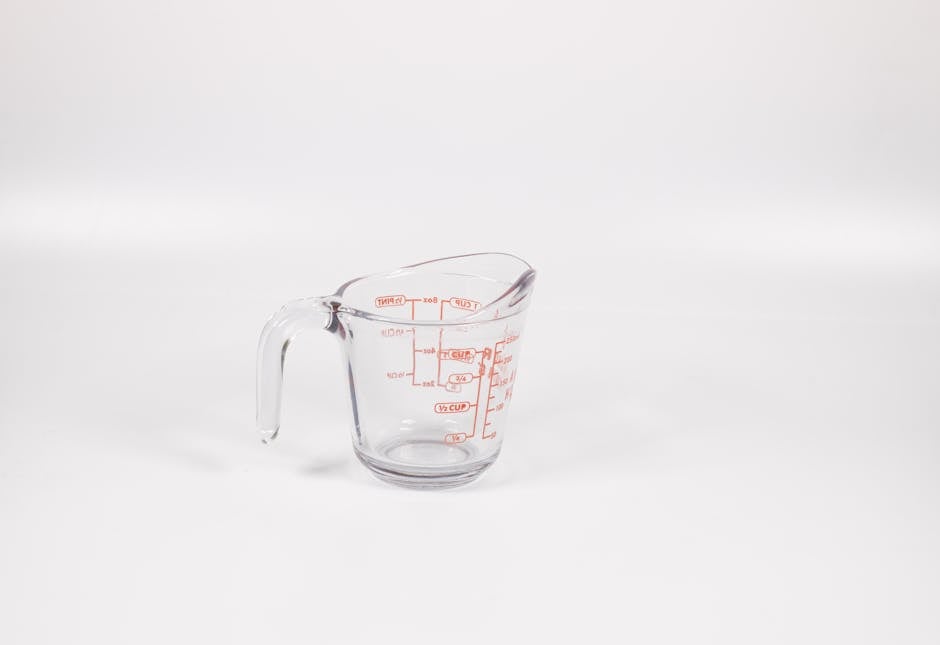
- Liquid measuring cups are transparent with a pour spout and measurement lines on the side. Place the cup on a flat surface and read the measurement at eye level at the bottom of the meniscus (the curved surface of the liquid).
- Brown sugar is a notable exception among dry ingredients -- recipes typically call for it "packed," meaning you press it firmly into the cup until it holds its shape when turned out.
Common Kitchen Conversions
These are the conversions every cook should know by heart:
- 3 teaspoons = 1 tablespoon
- 4 tablespoons = 1/4 cup
- 16 tablespoons = 1 cup
- 1 cup = 8 fluid ounces = 236.6 mL
- 2 cups = 1 pint
- 4 cups = 1 quart
- 4 quarts = 1 gallon
- 1 stick of butter = 1/2 cup = 8 tablespoons = 113 grams
For quick conversions between cups, grams, milliliters, and more, our Cooking Conversion Calculator handles the math instantly. And if you need to switch between metric and imperial volume units, the Volume Converter is always available.
Common Ingredient Weights
Since cups-to-grams conversions vary by ingredient, here are the most frequently needed values:
- All-purpose flour: 1 cup = 120 g
- Granulated sugar: 1 cup = 200 g
- Brown sugar (packed): 1 cup = 220 g
- Butter: 1 cup = 227 g
- Milk or water: 1 cup = 240 g
- Rolled oats: 1 cup = 80 g
- Honey: 1 cup = 340 g
- Cocoa powder: 1 cup = 85 g
Notice the enormous range -- a cup of oats weighs less than half of a cup of sugar. This is precisely why converting "3 cups" to grams requires knowing the specific ingredient. Our Recipe Converter includes a built-in ingredient database to handle these conversions accurately.
Adapting International Recipes
As food culture becomes increasingly global, you will encounter recipes from around the world with unfamiliar measurements:
- Australian tablespoon: 20 mL (most other countries use 15 mL).
- Japanese cup: 200 mL (compared to 236.6 mL for a US cup).
- UK pint: 568 mL (compared to 473 mL for a US pint).
- Metric cup (used in Australia and New Zealand): 250 mL.
When adapting recipes from other countries, always check which measurement system is being used. A "cup" in an American recipe is different from a "cup" in an Australian recipe. When in doubt, convert everything to grams using a scale or our Weight Converter.
Scaling Recipes Up or Down
Need to double a recipe for a party or halve it for a weeknight dinner? Scaling requires multiplying every ingredient by the same factor, but there are a few pitfalls to watch for:
- Spices and seasonings: Do not blindly double these. Start with 1.5 times the amount and adjust to taste.
- Baking powder and baking soda: These are chemical leaveners and generally scale linearly, but very large batches may need slight reduction.
- Cooking time: Doubling a recipe does not mean doubling the cooking time. Larger volumes heat more slowly, so you may need to extend the time by 25 to 50 percent and check for doneness.
- Pan size: Doubling batter means you need a larger pan or two standard pans. Overfilling a pan will lead to uneven baking.
Baking Precision Tips
Baking is a science, and precision matters more here than in any other area of cooking. Follow these tips for consistent results:
- Weigh flour, sugar, and butter. These three ingredients have the greatest impact on baked goods, and measuring them accurately will transform your results.
- Use room-temperature ingredients when the recipe calls for them. Cold butter and eggs behave differently in batter and can affect the final texture.
- Invest in an oven thermometer. Home ovens can be off by 25 degrees Fahrenheit or more. Knowing your oven's true temperature -- and being able to convert it from Fahrenheit to Celsius or vice versa -- is essential.
- Measure liquids in a liquid measuring cup and dry ingredients in dry measuring cups. They are not interchangeable.
Conclusion
Accurate measurement is the foundation of great cooking and baking. Whether you prefer cups or grams, the key is consistency and understanding the tools you are using. For quick conversions, bookmark our Recipe Converter and Cooking Conversion Calculator -- they will save you time and help ensure every dish turns out exactly as intended.