Understanding the Metric System: A Complete Guide
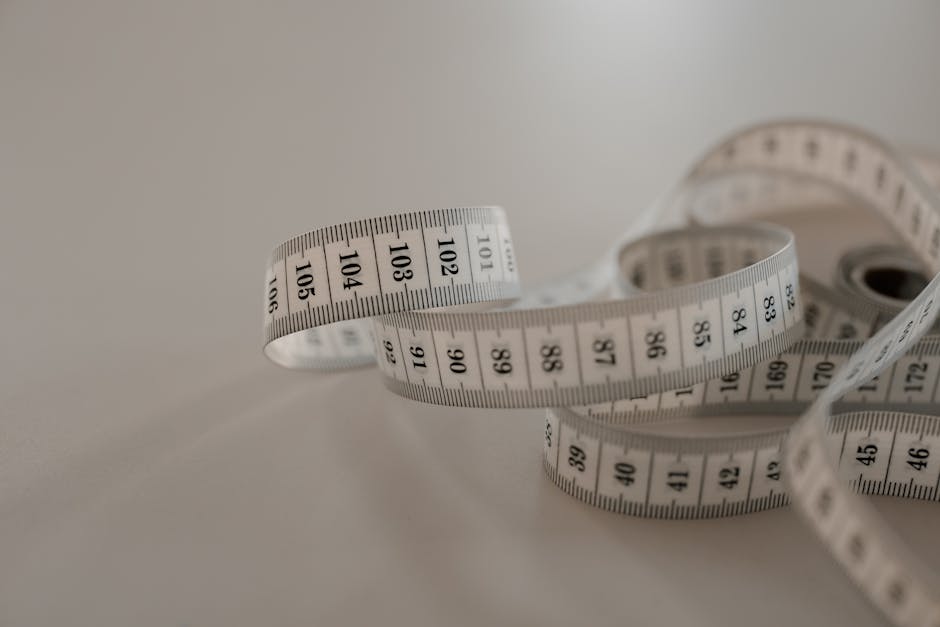
The metric system is one of humanity's most practical inventions. Used by more than 95% of the world's population, it provides a universal language for measurement that transcends borders and cultures. Whether you are a student, a traveler, a professional, or simply curious, understanding the metric system is an essential life skill. In this guide, we will walk through the fundamentals of the metric system, explain its base units and prefixes, and provide practical tips for converting between metric and imperial measurements.
What Is the Metric System?
The metric system, formally known as the International System of Units (SI), is a decimal-based system of measurement. Unlike older systems that relied on arbitrary standards like the length of a king's foot, the metric system is built on scientifically defined base units and scales by powers of ten. This makes calculations straightforward and reduces the chance of costly errors.
The system was first adopted in France during the 1790s and has since become the global standard for science, industry, and everyday commerce. Only three countries -- the United States, Liberia, and Myanmar -- have not officially adopted the metric system as their primary measurement standard, though even in those countries metric units are widely used in scientific and medical settings.
The Base Units
At the heart of the metric system are seven base units, but for everyday life you will most commonly encounter three:
- Meter (m) -- the base unit of length. Originally defined as one ten-millionth of the distance from the North Pole to the equator, the meter is now defined using the speed of light.
- Gram (g) -- the base unit of mass. One gram is roughly the mass of a small paperclip. In practice, the kilogram (1,000 grams) is used more frequently for daily measurements.
- Liter (L) -- the base unit of volume. One liter is equal to 1,000 cubic centimeters and is roughly the volume of a standard water bottle.
Other base units include the second for time, the kelvin for temperature, the ampere for electric current, and the mole for the amount of substance. Together, these seven units form the backbone of all scientific measurement.
Understanding Metric Prefixes
One of the most elegant features of the metric system is its use of prefixes to indicate multiples or fractions of a base unit. Each prefix represents a power of ten, making it simple to scale measurements up or down:
- Kilo- (k) = 1,000 times the base unit. A kilometer is 1,000 meters; a kilogram is 1,000 grams.
- Hecto- (h) = 100 times the base unit.
- Deca- (da) = 10 times the base unit.
- Deci- (d) = one-tenth of the base unit.
- Centi- (c) = one-hundredth of the base unit. A centimeter is 0.01 meters.
- Milli- (m) = one-thousandth of the base unit. A milliliter is 0.001 liters.
Because every step in the prefix ladder is a factor of ten, converting within the metric system requires only moving the decimal point. For example, 3.5 kilometers equals 3,500 meters -- just multiply by 1,000. Compare that with the imperial system, where you need to remember that there are 5,280 feet in a mile, 12 inches in a foot, and 3 feet in a yard.
Why Most of the World Uses Metric
The metric system gained worldwide adoption for several compelling reasons:
- Simplicity: The decimal structure makes arithmetic fast and intuitive.
- Consistency: Units relate to one another logically. One liter of water weighs one kilogram and occupies 1,000 cubic centimeters.
- Scientific precision: Researchers worldwide share data in metric units, eliminating conversion errors.
- International trade: Global commerce runs more smoothly when everyone uses the same measurement language.
"The metric system is for all people for all time." -- Nicolas de Condorcet, French mathematician and philosopher, 1791
How to Convert Between Metric and Imperial
If you live in a country that still uses imperial units, you will frequently need to convert between the two systems. Here are the most common conversions to remember:
- Length: 1 inch = 2.54 cm; 1 foot = 30.48 cm; 1 mile = 1.609 km
- Weight: 1 pound = 453.6 g (0.4536 kg); 1 ounce = 28.35 g
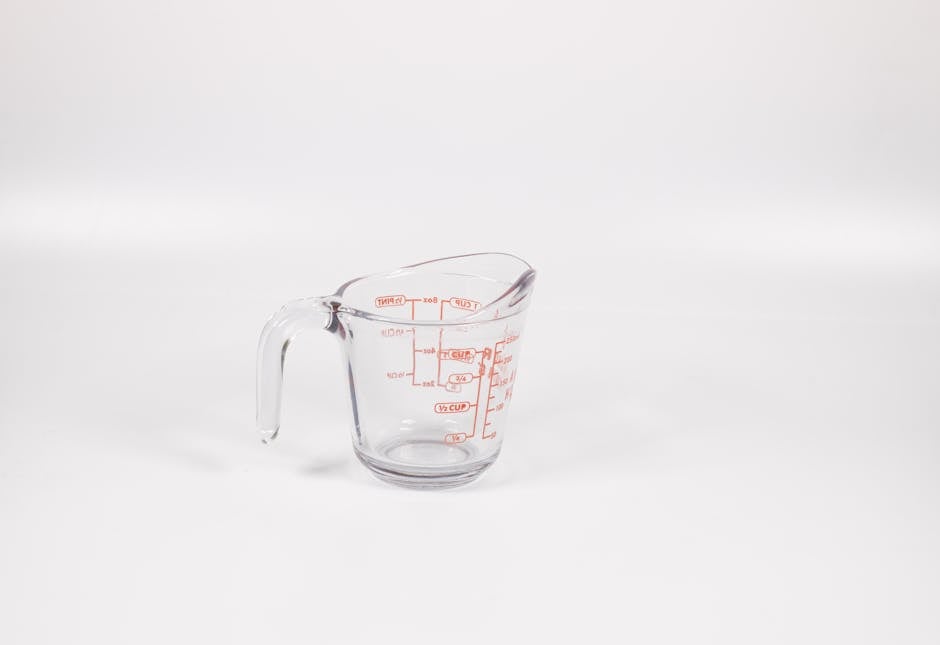
- Volume: 1 US gallon = 3.785 L; 1 US cup = 236.6 mL; 1 fluid ounce = 29.57 mL
- Temperature: Fahrenheit to Celsius: subtract 32, then multiply by 5/9
For quick mental conversions, try these handy approximations: a meter is roughly 3 feet 3 inches, a kilogram is about 2.2 pounds, and a liter is just over a quart. These shortcuts will serve you well when traveling or reading international content.
Of course, the easiest approach is to use a dedicated tool. Our Length Converter handles length conversions instantly, while the Weight Converter and Volume Converter take care of mass and liquid measurements. For temperature, our Temperature Converter switches between Celsius, Fahrenheit, and Kelvin in a single click.
Practical Tips for Learning the Metric System
Transitioning to metric thinking does not happen overnight, but these strategies can speed up the process:
- Start with reference points. Memorize a few benchmarks: a doorknob is about 1 meter high, a standard bottle of water is 500 mL, and room temperature is roughly 20 to 22 degrees Celsius.
- Use metric in daily life. Set your phone's weather app to Celsius, weigh produce in kilograms at the grocery store, and track your running distance in kilometers.
- Think in metric rather than converting. Instead of mentally translating 30 degrees Celsius to 86 degrees Fahrenheit, learn that 30 degrees Celsius means "a hot day."
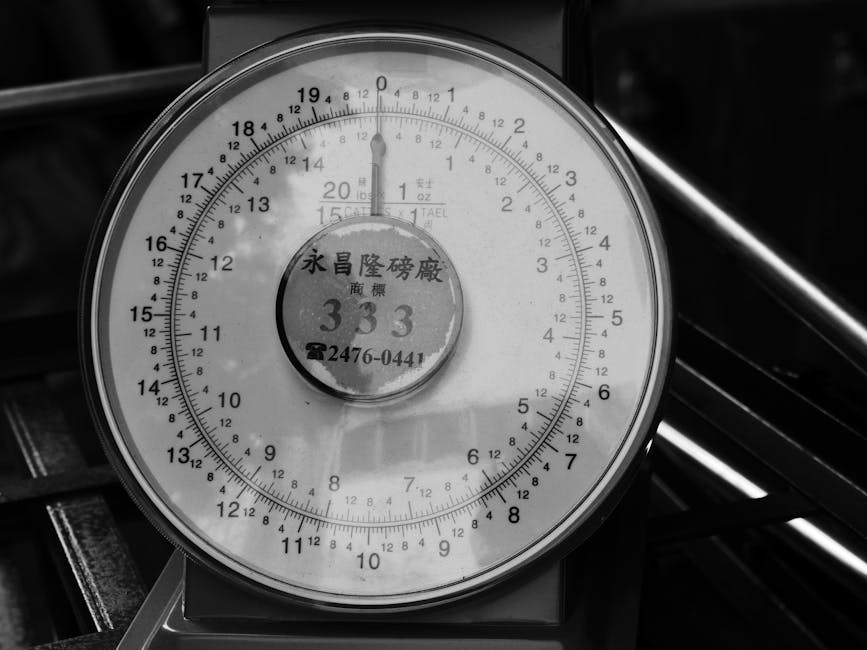
- Practice with cooking. International recipes often use grams and milliliters. Invest in a kitchen scale and measuring cup with metric markings.
The Future of Measurement
In 2019, the definitions of the kilogram, ampere, kelvin, and mole were redefined in terms of fundamental physical constants. This means that every base unit in the SI system is now tied to the laws of nature rather than physical artifacts. The platinum-iridium kilogram that sat in a vault in Paris for over a century has been retired in favor of a definition based on the Planck constant.
This shift represents a remarkable milestone: measurement standards that will remain accurate and reproducible anywhere in the universe. As science advances, the metric system continues to evolve -- but its core principle of simplicity through decimals remains as powerful as ever.
Conclusion
The metric system is more than a set of units -- it is a framework for clear, precise communication across every field of human endeavor. Whether you are converting kilometers to miles for a road trip, weighing ingredients for a recipe, or interpreting scientific data, fluency in the metric system will save you time and prevent errors. Bookmark our Length Converter, Weight Converter, and Volume Converter for quick access whenever you need to make a conversion, and start building your metric intuition today.